Loading organizations...

§ Venture Capital · New York City, NY, USA
Global investment firm managing capital in alternative assets like private equity for institutional and wealth investors, focused on private markets.
KKR is a leading global investment firm specializing in alternative assets, including private equity, private credit, real estate, infrastructure, capital markets, and insurance, based in New York City, New York. The firm manages and invests capital across private markets worldwide on behalf of institutional investors, wealth investors, family offices, and companies. As of December 31, 2024, KKR and its personnel had approximately $28.6 billion invested or committed to its funds and portfolio companies. KKR is known for significant transactions such as the leveraged buyouts of RJR Nabisco in 1989, Energy Future Holdings in 2007, and Alliance Boots in 2007. The organization was founded in 1976 by Henry Kravis, George Roberts, and Jerome Kohlberg. Its business model centers on KKR manages and invests capital in alternative assets, earning fees and carried interest from investments on behalf of clients.
Key people at KKR.
KKR was founded in 1976 by Henry Kravis (Co-Founder and Co-Executive Chairman).
Key people at KKR.



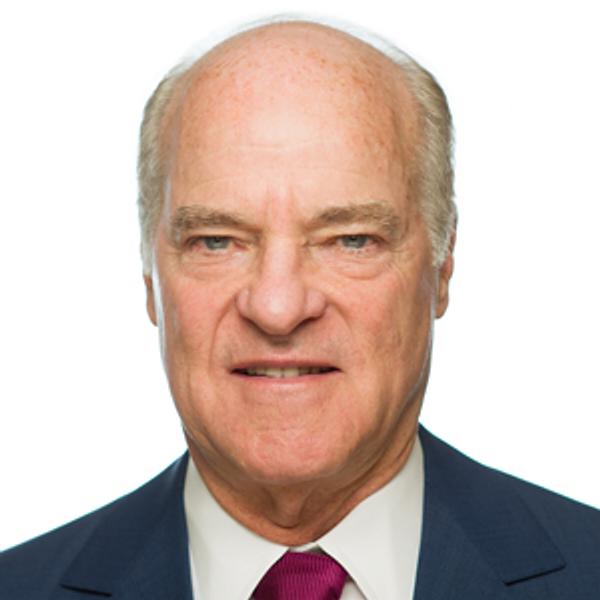






KKR was founded in 1976 by Henry Kravis (Co-Founder and Co-Executive Chairman).
KKR has more than 26 tracked investments across 24 companies. The latest tracked deal is $110.0M Series C in Advanced Navigation in March 2026.
KKR (Kohlberg Kravis Roberts & Co.) is a global investment firm specializing in private equity and alternative asset management. Its mission is to generate attractive returns by leveraging deep operational expertise and strategic financial engineering to transform companies and create value. KKR invests across multiple sectors including private equity, credit, real estate, infrastructure, and growth equity, impacting the startup and broader business ecosystem by providing capital, operational support, and strategic guidance to foster growth and innovation[1][3][6][9].
Founded in 1976 by Jerome Kohlberg Jr., Henry Kravis, and George Roberts—former Bear Stearns colleagues—KKR pioneered the leveraged buyout (LBO) model, using borrowed funds to acquire undervalued or poorly managed companies and improve their performance. Early landmark deals such as the 1989 $25 billion RJR Nabisco buyout cemented its reputation as a transformative force in private equity. Over time, KKR expanded beyond traditional buyouts into credit, real estate, and infrastructure, evolving into a diversified global investment firm with a strong focus on operational value creation and sustainability[1][2][3][4][5].
KKR rides the trend of increasing demand for alternative investments and operational value creation in a complex global economy. Its timing was critical in pioneering LBOs during the 1970s and 1980s when many companies were undervalued or poorly managed, allowing it to unlock significant value. Today, KKR influences the broader ecosystem by providing capital and strategic support to startups and mature companies alike, fostering innovation, scaling businesses, and promoting sustainability. Its expansion into credit, real estate, and infrastructure aligns with market forces favoring diversified, resilient investment strategies amid economic uncertainty[1][3][6].
KKR is positioned to continue evolving as a global leader in alternative assets by deepening its operational capabilities and expanding into new asset classes and geographies. Trends such as digital transformation, ESG investing, and infrastructure development will shape its journey. The firm’s influence is likely to grow as it balances financial returns with broader social and environmental impact, maintaining its pioneering spirit while adapting to changing market dynamics[1][3][6].
KKR’s legacy as a private equity innovator and its ongoing diversification underscore its role as a cornerstone of modern alternative investing, continuing to shape industries and economies worldwide.