
Loading organizations...
Bertelsmann is a massive global media and entertainment conglomerate based in Gütersloh, Germany, that operates across book publishing, television broadcasting, music production, and digital education services. The corporation owns major international subsidiaries including recognizable brands like Penguin Random House, RTL Group, BMG, and Arvato, currently employing approximately eighty thousand people globally. Generating annual revenues exceeding twenty billion euros, the company serves consumers and educational institutions worldwide through diverse content platforms, magazine distribution, and marketing services. To accelerate its strategic pivot toward modern technology, the organization recently invested over one billion euros in digital education and artificial intelligence services. Originally founded in July 1835 by publisher Carl Bertelsmann to produce affordable religious literature, the enterprise is now majority owned by the Bertelsmann Stiftung foundation following a structural capital transfer initiated by fifth generation leader Reinhard Mohn in 1993.
Key people at Bertelsmann.
Bertelsmann was founded in 1835 by Carl Bertelsmann (Founder).
Key people at Bertelsmann.


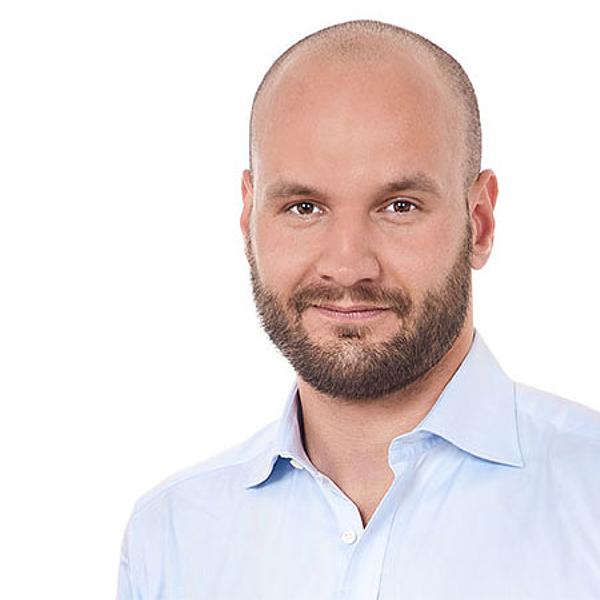

Bertelsmann was founded in 1835 by Carl Bertelsmann (Founder).
Bertelsmann SE & Co. KGaA is a global media, services, and education company founded in 1835, operating in about 50 countries with approximately 75,000 employees and €19 billion in revenues for the 2024 financial year.[7] It encompasses major divisions like RTL Group (entertainment and TV), Penguin Random House (trade book publishing), BMG (music), Arvato Group (services), Bertelsmann Marketing Services, Bertelsmann Education Group, and Bertelsmann Investments, emphasizing creativity, entrepreneurship, and innovation in content and services.[3][7] As a privately held family business with majority shares held by the not-for-profit Bertelsmann Stiftung, it focuses on empowering creators, adapting to technological shifts, and providing employee profit-sharing.[3][4]
Bertelsmann began in 1835 when Carl Bertelsmann, a printer and bookbinder born in 1791 in Gütersloh, Germany, established C. Bertelsmann Verlag as a small publisher of evangelical hymn books and devotional pamphlets in Pietist eastern Westphalia, where headquarters remain today.[1][2][3][6] After Carl's death in 1850, his son Heinrich took over, followed by Heinrich's son-in-law Johannes Mohn in 1887, marking the Mohn family's involvement; the seventh generation of the Bertelsmann/Mohn family still participates.[2][3][6] Post-WWII destruction, Reinhard Mohn rebuilt the company after the 1948 German currency reform, launching the revolutionary Lesering book club for direct sales, driving explosive growth—turnover doubled yearly from 1951-1953 (DM7M to DM30M), hit DM100M by 1956-57, and DM1B by 1973 with 11,000 employees.[1][2] Key expansions included U.S. acquisitions like Doubleday-Dell and RCA's music into BMG (1985-1986, over $800M), RTL Group IPO in 2000, and a 1999-2002 review of its National Socialist era history.[1][2][4]
Bertelsmann rides digitization and content democratization trends, evolving from print to integrated media/services ecosystems, influencing streaming, music rights, and edtech amid user habit shifts.[4][7] Its timing post-WWII and in U.S. expansions capitalized on market upheavals, like currency reform and globalization, positioning it as a bridge between traditional media and tech-driven models (e.g., BMG's platform for royalties).[1][3] Favorable forces include rising demand for premium content, AI in publishing/education, and services outsourcing; it shapes the ecosystem via investments, creator empowerment, and scale in fragmented markets like music and TV.[3][7]
Bertelsmann's next phase likely amplifies AI integration in content creation, personalized education via Bertelsmann Education Group, and music/services growth through BMG and Arvato amid streaming wars and data regulations.[3][7] Trends like generative AI, global content localization, and sustainable media will propel it, evolving its influence from legacy media guardian to tech-media hybrid innovator. This builds on 190 years of reinventing distribution—from hymnbooks to digital platforms—ensuring enduring impact in a creative economy.[4][6]
Bertelsmann has 25 tracked investments across 24 companies. The latest tracked deal is $30.0M Other Equity in AgroStar in November 2025.
