Loading organizations...

§ Private Profile · Palo Alto, CA, USA
PsiQuantum is a technology company.
PsiQuantum has raised $2.2B across 5 funding rounds.
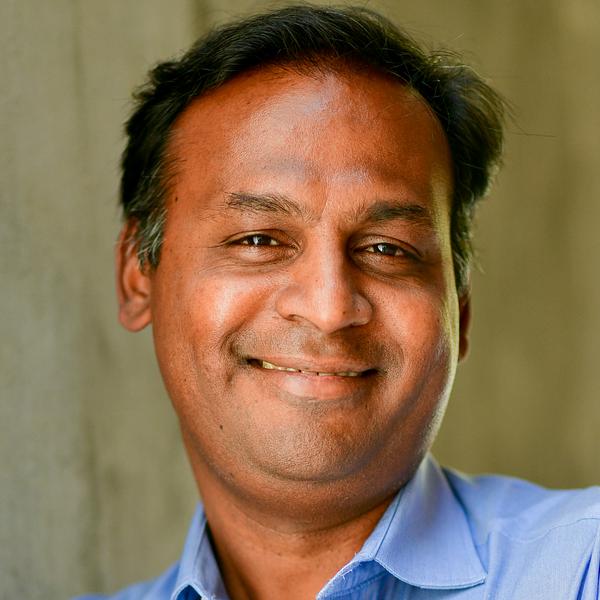
Key people at PsiQuantum.
PsiQuantum was founded in 2016 by Jeremy O'Brien Terry Rudolph Peter Shadbolt Mark Thompson (Co-Founder).
PsiQuantum has raised $2.2B in total across 5 funding rounds.
PsiQuantum is a quantum computing company on a mission to build and deploy the world’s first useful quantum computers, leveraging photonic qubits and semiconductor manufacturing.
PsiQuantum has raised $2.2B across 5 funding rounds. Most recently, it raised $1.0B Series E in September 2025.
| Date | Round | Lead Investors | Other Investors | Status |
|---|---|---|---|---|
| Sep 10, 2025 | $1B Series E | Tony KIM, Temasek | Michael Tolo, 1789 Capital, Adage Capital Management, Macquarie Capital, Morgan Stanley, NVentures, Qatar Investment Authority, Ribbit Capital, S Ventures, Third Point Ventures, T. Rowe Price Associates, Type ONE Ventures | Announced |
| Apr 30, 2024 | $617.1M Venture Round | Anthony Albanese, Steven Miles | — | Announced |
| Jul 1, 2021 | $450M Series D | Tony KIM | Earlybird Venture Capital, Ischyros NEW York, Mouro Capital, Playground Global, Shunwei Capital, Alice Zhang, SAM Altman, Blackbird Ventures, Samir Kumar, Temasek | Announced |
| Apr 1, 2020 | $150M Series C | — | Andreessen Horowitz, Intel Capital, The House Fund, Peter Sonsini | Announced |
| Jun 1, 2016 | $14M Series A | — | Andreessen Horowitz, Intel Capital, The House Fund, Peter Sonsini | Announced |
Key people at PsiQuantum.
PsiQuantum was founded in 2016 by Jeremy O'Brien Terry Rudolph Peter Shadbolt Mark Thompson (Co-Founder).
PsiQuantum has raised $2.2B in total across 5 funding rounds.
PsiQuantum's investors include Tony Kim, Temasek, Michael Tolo, 1789 Capital, Adage Capital Management, Macquarie Capital, Morgan Stanley, NVentures, Qatar Investment Authority, Ribbit Capital, S Ventures, Third Point Ventures.
PsiQuantum is a quantum computing company developing fault-tolerant, million-qubit quantum computers using silicon photonic qubits manufactured in existing semiconductor foundries. It serves governments, researchers, and enterprises tackling computationally intensive problems in drug discovery, materials science, and optimization, solving the scalability barriers of prior quantum approaches by enabling utility-scale systems that outperform classical supercomputers.[1][2][4]
The company operates pre-revenue, contracting systems for research while building infrastructure like quantum data centers in Brisbane, Australia, and Chicago, Illinois. With over $1.3 billion raised—culminating in a $1 billion Series E at $7 billion valuation in 2025—PsiQuantum demonstrates explosive growth momentum, backed by partnerships with GlobalFoundries, NVIDIA, DARPA, and governments in the US, Australia, and UK.[2][3][5]
PsiQuantum emerged from over a decade of academic research at the University of Bristol and Imperial College London, where founders Jeremy O’Brien, Terry Rudolph, Peter Shadbolt, and Mark Thompson—professors and researchers—pioneered photonic quantum technologies. Rejecting the NISQ (Noisy Intermediate-Scale Quantum) paradigm dominant since 2001, O’Brien spun off the team in 2015 (officially incorporating as PsiQuantum, formerly PsiQ, in 2016) with a bold mission: skip lab demos and build a commercially useful, million-qubit fault-tolerant machine using manufacturable photonic qubits.[1][2][5]
Early traction came from leveraging semiconductor fabs like GlobalFoundries' Fab 8 for thousands of silicon photonic wafers. Pivotal moments include 2022 US federal funding with GlobalFoundries, 2023 DARPA and UK grants, 2024's A$940 million Australian investment for a Brisbane facility targeting 2027 operations, and a Chicago MOU for a quantum park.[3][5]
PsiQuantum stands out in quantum computing by prioritizing scalability over incremental demos, using photonic qubits compatible with mature semiconductor processes:
PsiQuantum rides the fault-tolerant quantum computing wave, addressing scaling hurdles in manufacturability, cooling, and networking amid a global race for utility-scale systems. Timing aligns with trillion-dollar semiconductor investments and surging AI demands for low-power optical networking, where PsiQuantum's BTO switches offer dual-use potential.[3][4]
Market forces favor its approach: governments (US DoE, DARPA, Australia, UK) pour billions into quantum infrastructure, viewing it as critical for economic and strategic edges in simulation-heavy fields. By influencing ecosystems through university MOUs, foundry partnerships, and open endpoints for researchers, PsiQuantum accelerates commercialization, shifting quantum from labs to datacenters and outpacing rivals stuck in NISQ.[2][5]
PsiQuantum's trajectory points to prototype deployments in 2026-2027, with Brisbane and Chicago sites operationalizing the first utility-scale machines, funded by its $7 billion valuation and latest $1 billion round for chip scaling and BTO ramp-up.[3]
Shaping trends include AI-quantum convergence, government quantum parks, and photonic tech maturation; influence may evolve from pioneer to infrastructure provider, licensing tech or powering enterprise clouds. As the most-funded quantum player, PsiQuantum exemplifies how photonic scalability unlocks computing's next era—transforming impossible problems into solvable ones.[2][4]