Loading organizations...
Deutsche Bank is a universal bank providing commercial banking, investment banking, and global market services, headquartered in Frankfurt, Germany. The financial institution operates across 56 countries, facilitating cross-border transactions, international trade finance, and asset management for corporate, industrial, government, and institutional clients worldwide. Operating for over 150 years, the firm generates revenue through deposits, corporate lending, trading activities, and investment banking fees. To expand its global footprint and derivatives capabilities, the organization has executed several major strategic acquisitions, including the purchase of UK investment bank Morgan Grenfell and German retail bank Deutsche Postbank. Additionally, the enterprise significantly increased its United States market presence by acquiring Bankers Trust in a transaction valued at $10.1 billion. Deutsche Bank was originally founded in Berlin in 1870 by a financial consortium led by Adelbert Delbrück and Ludwig Bamberger.
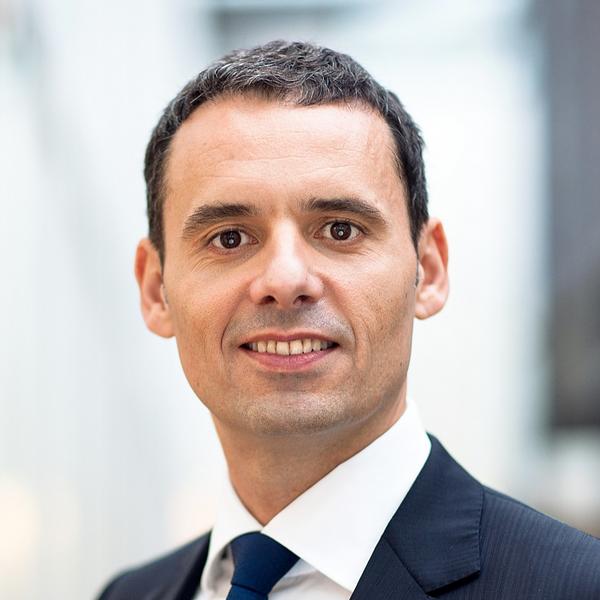
Key people at Deutsche Bank.
Deutsche Bank is one of the world's largest and most prominent banking institutions, founded in 1870 in Berlin and now headquartered in Frankfurt am Main. Its mission centers on supporting and expanding Germany’s investment flows and international trade relations, reflecting a strong global banking philosophy. The bank operates across key sectors including corporate banking, investment banking, asset management, and private wealth management. Deutsche Bank plays a significant role in the global financial ecosystem, influencing capital markets, corporate finance, and cross-border investments, thereby impacting startups and established companies through financing, advisory, and investment services[1][7].
Deutsche Bank was founded on March 10, 1870, with a license granted by King Wilhelm I of Prussia. The idea emerged amid industrialization, which created growing financial needs that traditional banks could not fully address. Key founders included Adelbert Delbrück, a banker, and Ludwig Bamberger, a politician and monetary expert, who envisioned a bank that would facilitate international trade and industrial financing. The bank began operations in Berlin on April 9, 1870, quickly expanding with branches in Bremen, Hamburg, Shanghai, Yokohama, and London by 1873. Over time, Deutsche Bank absorbed several other German banks and evolved through mergers, notably reuniting three successor institutions in 1957 to form the modern Deutsche Bank AG headquartered in Frankfurt[1][2][3][4].
Deutsche Bank rides the trend of globalization and digital transformation in finance. The timing is critical as financial services increasingly integrate technology for efficiency, risk management, and customer experience. Market forces such as fintech innovation, regulatory changes, and global capital flow dynamics favor banks that can adapt and lead in digital banking and sustainable finance. Deutsche Bank influences the broader ecosystem by financing tech companies, supporting fintech startups, and investing in digital infrastructure, thus shaping the future of banking and financial services worldwide[1][7].
Looking ahead, Deutsche Bank is likely to continue evolving its digital capabilities and sustainability initiatives to meet changing market demands and regulatory environments. Trends such as artificial intelligence in banking, green finance, and blockchain technology will shape its journey. The bank’s influence may grow as it leverages its global network and historical expertise to support innovation and economic development, maintaining its role as a key player in global finance and the startup ecosystem. This trajectory ties back to its founding mission of facilitating international trade and investment through adaptive and forward-looking banking solutions[7][1].
Key people at Deutsche Bank.