
Loading organizations...
Virgin Group operates as a multinational venture capital conglomerate with a primary focus on investment management across a diverse portfolio of businesses. The group’s core activities span numerous sectors, including telecommunications, media, travel, and leisure. Through strategic investments and brand licensing, Virgin establishes and develops enterprises that cater to broad consumer markets, emphasizing innovation and customer experience within its various ventures globally.
The company was founded in February 1970 by Richard Branson and Nik Powell. Their initial venture began in the music industry, growing from a mail-order record business into a record label. This foundational enterprise laid the groundwork for Virgin's subsequent expansion into a wide array of industries, demonstrating an early insight into diversified brand application and consumer services beyond its original scope.
Virgin’s diverse offerings serve a vast customer base across its numerous business interests, ranging from mobile phone users to airline passengers and holidaymakers. The group's overarching vision centers on continuously identifying and cultivating new business opportunities, extending its brand presence, and delivering distinctive consumer experiences across an ever-evolving global market. The conglomerate aims to maintain its position as a significant force in global enterprise.
Key people at Virgin.
Virgin was founded in 1970 by Richard Branson (Founder).
Key people at Virgin.
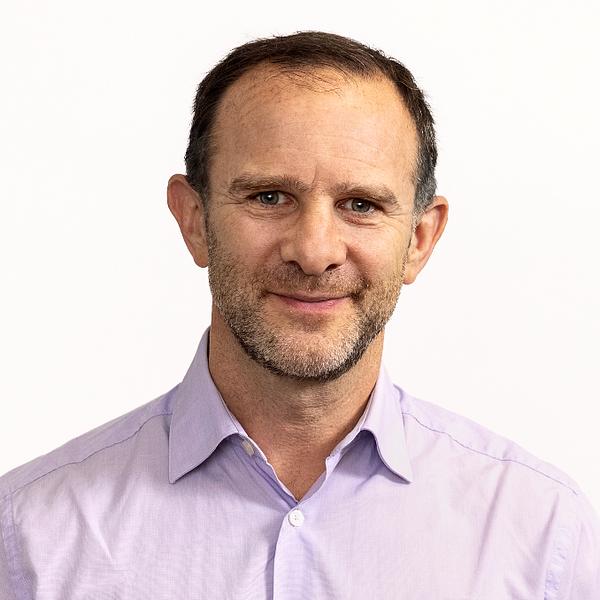






Virgin was founded in 1970 by Richard Branson (Founder).
Virgin Group is a British multinational venture capital conglomerate and holding company founded by Richard Branson and Nik Powell, operating as the core of a global brand empire spanning over 400 autonomous companies across diverse sectors like airlines (Virgin Atlantic), telecommunications (Virgin Mobile), financial services, hospitality, health clubs, space tourism (Virgin Galactic), healthcare, and entertainment.[1][3][5] Its mission centers on disrupting established markets through customer-focused innovation, employee engagement, and brand consistency, functioning via a hybrid model of direct investments, strategic partnerships, and brand licensing that allows flexibility and risk diversification.[1][3] In the startup ecosystem, Virgin Group impacts growth by supporting over 11,000 UK entrepreneurs with £35m+ in pre-seed funding through programs like Virgin StartUp, Ready Steady Grow, and Crowdboost, while providing loans, mentoring, and equity crowdfunding acceleration.[3]
The group's decentralized structure enables sector-specific autonomy, as seen in Virgin Atlantic's 2024 performance with £3.3B revenue, 7.6% capacity growth, £230M EBIT, and cost efficiencies like non-fuel costs 16% below UK inflation, alongside cargo market leadership and debt reduction.[2] Employing over 70,000 worldwide, Virgin emphasizes employee-centric benefits like the "Screw It, Let’s Do It" financial pot for personalized choices, boosting pension savings and benefit uptake by 20%.[4] With a net worth of £3B as of early 2023, it blends conglomerate and keiretsu elements, licensing its iconic brand to affiliates like Virgin Records (Universal) and Virgin Media (Liberty Global).[3]
Virgin Group traces its roots to February 1970, when Richard Branson and Nik Powell launched a mail-order record business amid the UK student movement, evolving into Virgin Records—a disruptive music label that challenged industry giants.[1][3] Incorporated formally in 1989 (with trading from the 1970s) and restructured as Virgin Group Limited in 1993 (company number 02857673), it expanded aggressively under Branson's vision, leaping from music to aviation with Virgin Atlantic in 1984 by targeting customer pain points like poor service and introducing innovations such as in-flight entertainment and premium economy.[1][5]
Pivotal moments include the 1980s telecom entry with Virgin Mobile and the 2000s push into space via Virgin Galactic, embodying Branson's boundary-pushing ethos and proving his principles—customer obsession, employee empowerment, and disruption—transcend sectors.[1][3] By 2008, it encompassed over 200 companies; today, over 400 reflect this evolution from record label to global powerhouse, with Branson as the enduring figurehead driving leadership transitions and expansions like healthcare in Australia and NHS services in the UK.[1][3]
Virgin Group rides trends in experiential disruption and diversification, timing expansions like space tourism (Virgin Galactic's hypersonic plans and research contracts) with commercialization of new frontiers, while telecom and fintech arms capitalize on digital connectivity demands.[1][3] Market forces favoring it include post-pandemic travel recovery (Virgin Atlantic's 7.6% capacity growth and UK cargo lead) and startup booms, bolstered by its equity crowdfunding and mentoring that democratize funding amid VC consolidation.[2][3]
It influences the ecosystem by licensing its rebellious brand to independents (e.g., Virgin Media under Liberty Global), fostering innovation in healthcare (NHS partnerships, Australian fitness/health) and ventures, while employee-centric models set benchmarks for retention in hybrid work eras—amplifying talent attraction in competitive tech-adjacent fields.[3][4]
Virgin Group's decentralized engine positions it for sustained expansion, with Virgin Atlantic's profitability signaling travel rebound strength and Virgin Galactic eyeing hypersonic revenue amid space economy growth.[1][2] Trends like AI-driven personalization in benefits, sustainable aviation, and startup scaling via crowdfunding will shape its path, potentially growing healthcare and venture arms as global demographics shift.[3][4]
Its influence may evolve toward deeper tech integrations (e.g., telecom-space synergies) and Branson-inspired leadership continuity, reinforcing disruption in maturing markets—echoing its origin as a student mail-order that built a £3B empire challenging giants.[1][3]
Virgin has 4 tracked investments across 4 companies. The latest tracked deal is $25.0M Series A in Lightyear in July 2022.
