Loading organizations...

§ Private Profile · San Francisco, CA 94107
Easy to use computational biology tools for drug discovery
Tamarind Bio has raised $14.0M across 1 funding round.
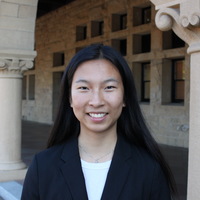
Key people at Tamarind Bio.
Tamarind Bio was founded in 2023 by Deniz Kavi (Co-founder & CEO) and Sherry Liu (Founder).
Tamarind Bio has raised $14.0M in total across 1 funding round.
Tamarind Bio is a website and API which allows scientists to use computational biology tools at scale using a simple interface. On Tamarind, scientists can use ML models like AlphaFold to design and simulate molecules by simply selecting inputs instead of or setting up a high performance computing environment or dealing with DevOps.
Our tools are used by thousands researchers in large pharma companies, top biotechs, and academic institutions. We currently focus on models in protein design and engineering, including for antibodies/therapeutics and enzymes.
Get in touch at founders@tamarind.bio
Key people at Tamarind Bio.
Tamarind Bio was founded in 2023 by Deniz Kavi (Co-founder & CEO) and Sherry Liu (Founder).
Tamarind Bio has raised $14.0M in total across 1 funding round.
Tamarind Bio's investors include DIMENSION, Nan Li.
Tamarind Bio has raised $14.0M across 1 funding round. Most recently, it raised $14.0M Series A in March 2026.
| Date | Round | Lead Investors | Other Investors | Status |
|---|---|---|---|---|
| Mar 26, 2026 | $14M Series A | DIMENSION, NAN LI, Dimension | — | Announced |
Tamarind Bio is a computational biology platform designed to democratize AI-powered drug discovery by providing easy-to-use, no-code tools that accelerate molecular design and protein engineering. Its platform integrates state-of-the-art AI models like AlphaFold and RFdiffusion to enable scientists—regardless of programming expertise—to predict protein structures, design novel molecules, and simulate molecular interactions at scale. Tamarind serves pharmaceutical companies, biotech firms, and academic researchers, helping them overcome the technical complexities of computational biology and drastically reduce the time and effort required for drug discovery[1][2][3].
The company’s mission is to put the power of AI in the hands of any scientist, enabling faster translation of ideas into real-world medicines. By simplifying infrastructure setup and automating workflows, Tamarind Bio addresses a critical bottleneck in biotech R&D, fostering innovation and efficiency in drug discovery. Its growth momentum is strong, with thousands of scientists from leading institutions and companies already using the platform daily, and plans to expand into smaller labs and biotech startups through partnerships and co-marketing with AWS[1][2].
Tamarind Bio was co-founded in 2023 by Deniz Kavi and Sherry Liu, who met as undergraduates at Stanford University studying Computer Science and conducting computational biology research. Their firsthand experience with the inefficiencies and technical barriers of deploying bioinformatics tools inspired them to create a platform that abstracts away the complexity of computational infrastructure and model management[2][1].
Recognizing that both biotech startups and large pharmaceutical companies face similar challenges in scaling AI-driven drug discovery, they built Tamarind Bio on AWS to leverage cloud scalability and advanced AI models. Early traction came from adoption by top-tier academic institutions like Stanford, Harvard, and Oxford, as well as leading pharma companies, validating the platform’s value and usability[1][2].
Tamarind Bio rides the wave of AI-driven transformation in life sciences, particularly the surge in computational drug discovery powered by breakthroughs in protein folding and molecular design AI models. The timing is critical as pharmaceutical R&D increasingly relies on scalable, cloud-based AI tools to reduce costs and speed up the drug development pipeline.
Market forces favor platforms like Tamarind that lower entry barriers for computational biology, enabling smaller labs and startups to compete with large pharma by leveraging advanced AI without heavy infrastructure investment. By simplifying access to powerful models and automating workflows, Tamarind accelerates innovation and collaboration across academia and industry, influencing the broader ecosystem toward more democratized, AI-enabled drug discovery[1][2][4].
Tamarind Bio is well-positioned to become a central hub for computational drug discovery, expanding beyond large pharma to serve smaller biotech companies and academic labs. Future growth will likely be driven by continued integration of emerging AI models, enhanced automation features, and deeper partnerships within the cloud and biotech ecosystems.
As AI models evolve and the demand for rapid, cost-effective drug discovery intensifies, Tamarind’s platform could become indispensable for R&D teams worldwide. Its influence may extend beyond drug discovery into broader protein engineering and synthetic biology applications, shaping the future of life sciences research by making advanced computational tools universally accessible[1][2][3].
This trajectory aligns with Tamarind’s founding vision: empowering any scientist to harness AI for breakthrough discoveries, ultimately accelerating the development of new medicines and therapies.