
Loading organizations...

§ Private Profile · Menlo Park, CA, USA
Social networking platform for sharing photos and videos on mobile devices, allowing users to connect and build communities worldwide.
Instagram is a San Francisco, California-based social media platform that enables users to share photos and videos, connect with others, and build followings, originating from a photo-sharing focus within the Burbn check-in app. Operating under Meta Platforms, the company generates over $20 billion annually through advertising, serving a global consumer base that reached 1 billion users by June 2018. The platform, now boasting over 3 billion users worldwide, was acquired by Facebook (now Meta Platforms) for $1 billion in April 2012. Early investors included Andreessen Horowitz, Benchmark Capital, Jack Dorsey, and Chris Sacca; co-founders Kevin Systrom and Mike Krieger resigned in September 2018. Instagram was founded in 2010 by Kevin Systrom and Mike Krieger. Its business model centers on owned by Meta Platforms, generates revenue through advertising, including video ads from brands.
Instagram has raised $61.0M across 5 funding rounds.
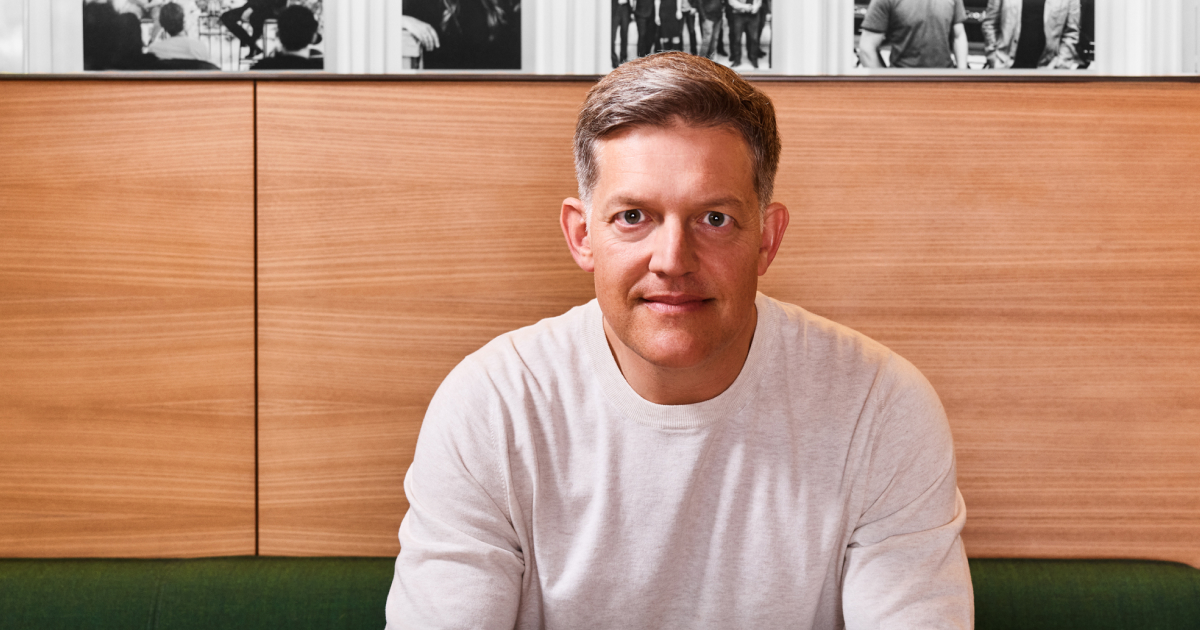
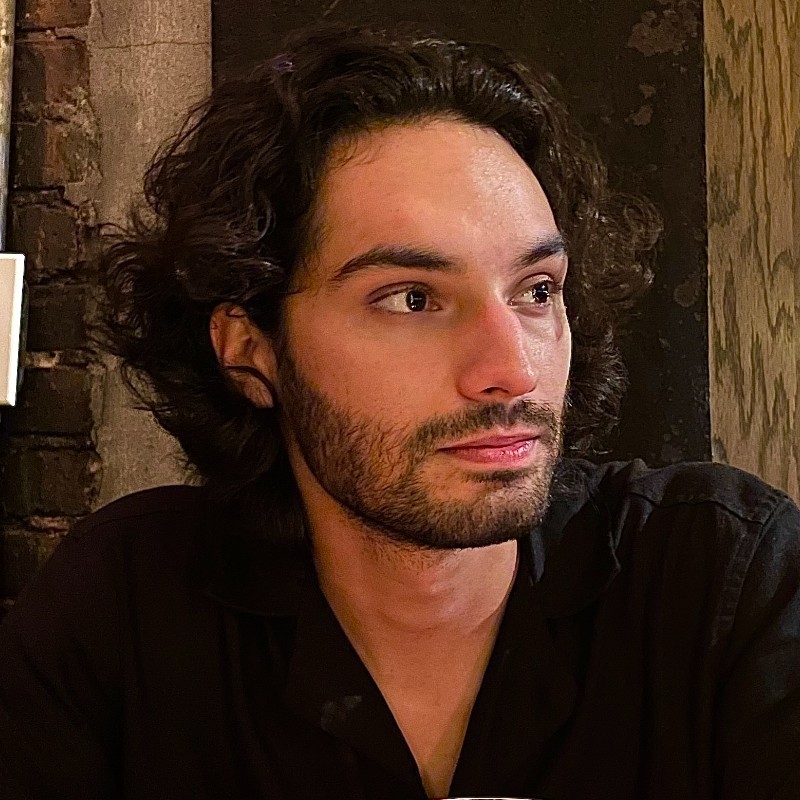
Key people at Instagram.
Instagram was founded in 2010 by Kevin Systrom (Founder) and Mike Krieger (Founder) and Gustavo Almeida (Co-founder).
Instagram has raised $61.0M in total across 5 funding rounds.
Instagram has raised $61.0M across 5 funding rounds. Most recently, it raised $2.2M 33&Brew - Series A in January 2026.
| Date | Round | Lead Investors | Other Investors | Status |
|---|---|---|---|---|
| Jan 21, 2026 | $2.2M Series A | Optimistic Capital | — | Announced |
| Apr 14, 2020 | $1.3M Seed | Davide Dattoli, Francesco Fumagalli, Cube3, Invictus Capital | — | Announced |
| Apr 1, 2012 | $50M Series B | Sequoia Capital | Baseline Ventures, Benchmark, Betaworks Ventures, DFJ, Greylock, GSR Ventures, Insight Partners, Spark Capital, Tenaya Capital, Tiger Global Management, Union Square Ventures, David Vélez, Shervin Pishevar, TIM Kendall, Joshua Kushner | Announced |
| Feb 1, 2011 | $7M Series A | Benchmark | Baseline Ventures, GSR Ventures, Hanabi Capital, Human Augmentation Syndicate, Lowercarbon Capital, Mosaic Ventures, Tenaya Capital, Shervin Pishevar, Adam D’Angelo, Jack Dorsey | Announced |
| Oct 1, 2010 | $500K Seed | — | Baseline Ventures, Hanabi Capital, Human Augmentation Syndicate, Lowercarbon Capital, Mosaic Ventures, Shervin Pishevar, Andreessen Horowitz | Announced |
Instagram was founded in 2010 by Kevin Systrom (Founder) and Mike Krieger (Founder) and Gustavo Almeida (Co-founder).
Instagram has raised $61.0M in total across 5 funding rounds.
Instagram's investors include Optimistic Capital, Davide Dattoli, Francesco Fumagalli, Cube3, Invictus Capital, Sequoia Capital, Baseline Ventures, Benchmark, Betaworks Ventures, DFJ, Greylock, GSR Ventures.
Key people at Instagram.









Instagram revolutionized mobile photography and social connection by transforming how billions of people share visual moments. What began as a pivotal pivot from a location-check-in app became one of the most influential social platforms in history, fundamentally reshaping digital communication and creating an entirely new category of visual-first social networking.
Instagram is a photo and video-sharing social media platform that enables users to capture, edit, and share visual content with followers in real-time.[1] The platform serves as a connection hub where individuals, creators, and businesses build audiences, establish personal brands, and engage with communities around shared interests. At its core, Instagram solves a fundamental human need: the desire to document and share life's moments with others, while simultaneously providing a discovery mechanism for finding new people, ideas, and content aligned with personal interests.
The platform's growth trajectory has been extraordinary. Instagram reached 25,000 users on its first day following its October 2010 launch, scaled to 1 million users within three months, and eventually surpassed 2 billion monthly active users by 2022.[1] This explosive adoption reflects Instagram's success in identifying and capitalizing on an emerging trend: the shift toward visual communication and mobile-first content consumption. Today, Instagram operates as a subsidiary of Meta Platforms, Inc., headquartered in Menlo Park, California, and functions as one of the company's most valuable properties alongside Facebook and WhatsApp.
Instagram's founding story exemplifies lean startup principles and the importance of pivoting based on user behavior. Kevin Systrom, a Stanford graduate who previously worked at Google, initiated the project in 2010 after securing $500,000 in seed funding from Baseline Ventures and Andreessen Horowitz.[1][2] His original concept was Burbn, a location-based check-in application inspired by the popularity of Foursquare, designed to allow users to post check-ins alongside photos as they traveled to new locations.[1]
Systrom recruited Mike Krieger, a fellow Stanford graduate who had previously worked on the social platform Meebo, to join the venture.[1] The pivotal moment came when the founders realized Burbn was too similar to the already-established Foursquare. More importantly, they observed a critical user behavior pattern: Burbn users were posting and sharing photos at an exceptional rate, signaling that visual content was becoming the primary driver of engagement.[3] This insight prompted a dramatic strategic pivot. Krieger and Systrom completely reworked their concept to focus exclusively on photo-sharing optimized for mobile devices, abandoning the check-in functionality entirely.[1]
The name "Instagram" itself reflects this new direction—a portmanteau of "instant camera" and "telegram," capturing the essence of instant visual communication.[2] The team finalized the app in just a few months, and Instagram officially launched on October 6, 2010, in Apple's App Store.[1] The response was immediate and overwhelming: the platform gained 1 million registered users in just two months, compared to Facebook's 10-month journey to the same milestone.[3] By April 2012—less than two years after launch—Facebook recognized Instagram's potential and acquired the company for $1 billion in cash and stock, a transaction that occurred just before Facebook's own initial public offering.[1]
Instagram's competitive advantages crystallized around several key dimensions:
Unlike text-centric platforms such as Twitter, Instagram prioritized photography as the primary medium of expression. This design choice aligned perfectly with the trajectory of smartphone camera technology and user preferences, making it the natural platform for mobile visual storytelling.
The initial version of Instagram was deliberately minimal—users could post pictures, like, comment, and follow other users.[3] This focused feature set eliminated friction and made the platform immediately intuitive. The app's lightweight design ensured fast performance even on early mobile networks.
A critical differentiator emerged from a personal insight: Kevin Systrom's wife expressed reluctance to use the app because she felt her photography skills were inferior to friends using filters.[4] This observation led to the creation of Instagram's first filter, the X Pro II, which democratized photo editing and became a signature feature.[4] By September 2011, Instagram introduced an updated app icon with extensive camera settings, one-touch rotation, and new camera effects, further cementing its position as a creative tool.[3]
In April 2012, Instagram launched on Android, dramatically expanding its addressable market beyond iPhone users and reaching 50 million users within that month.[3] This strategic move proved that Instagram's appeal transcended Apple's ecosystem and could scale globally.
Instagram demonstrated agility in evolving its feature set. In August 2016, the platform launched Instagram Stories, allowing users to share ephemeral content that expires after 24 hours—a feature that directly addressed competition from Snapchat while maintaining Instagram's visual focus.[2] The company also pioneered advertising innovations, introducing carousel ads in 2015 that allowed advertisers to display multiple images with linking options, followed by video carousel ads in 2016.[2]
Instagram emerged at a precise inflection point in mobile technology and social behavior. The convergence of several macro trends created ideal conditions for its explosive growth:
By 2010, smartphone cameras had reached sufficient quality that users began treating their phones as primary cameras rather than backup devices. Instagram capitalized on this shift by building the first platform optimized entirely around mobile photography, rather than retrofitting desktop-era social networks to mobile.
Instagram rode a fundamental shift in how humans prefer to communicate. Text-based communication, while efficient, lacks the emotional richness and immediacy of visual content. Instagram recognized that users would gravitate toward platforms enabling visual expression, particularly as mobile devices made photography ubiquitous.
Instagram's architecture created powerful network effects: each new user increased the platform's value for existing users by expanding the pool of content creators and audiences. This dynamic attracted both casual users and early creators, establishing Instagram as the foundational platform for the modern creator economy—a trend that would reshape media, marketing, and entertainment over the following decade.
Instagram's success validated the visual-first social platform model and influenced the entire industry. Competitors scrambled to add photo-sharing capabilities; established platforms like Facebook and Twitter integrated visual content more prominently; and new entrants like Snapchat, TikTok, and Pinterest emerged to compete in the visual social space. Instagram essentially created a new category and defined its rules.
Instagram transformed from a scrappy two-person startup into a $1 billion acquisition in 18 months—a valuation that proved prescient given the platform's subsequent dominance. The company's ability to identify an emerging user behavior pattern (photo-sharing), pivot decisively, and execute flawlessly established a template for successful startup scaling.
Looking forward, Instagram faces an evolving landscape. The platform must navigate competition from TikTok's short-form video dominance, maintain relevance as user demographics shift, and balance creator monetization with platform sustainability. Meta's integration of Instagram with its broader ecosystem—including Reels (short-form video), shopping features, and cross-app messaging—suggests a strategy of evolving Instagram beyond pure photo-sharing into a comprehensive social commerce and entertainment platform.
The fundamental insight that drove Instagram's creation remains valid: humans have an intrinsic desire to share visual moments and connect with others through imagery. As long as Instagram continues innovating around this core truth while adapting to emerging formats (video, AR, immersive experiences), it will likely maintain its position as one of the world's most influential social platforms. The company's journey from Burbn to Instagram to Meta subsidiary demonstrates how identifying a genuine user need, executing with focus, and remaining adaptable to market signals can create generational wealth and reshape how billions of people communicate.