Loading organizations...
DuckDuckGo is a Valley Forge, Pennsylvania-based technology company that operates a privacy-focused search engine designed to prevent the tracking of user clicks and search histories. Positioned as an alternative to tracking-based consumer services like Google, the platform provides instant search results alongside a broader suite of email and web browser tools. The independent enterprise is majority-owned by its team members and has achieved significant operational scale, reaching a reported milestone of 30 million daily search queries in 2018. In March 2019, the search engine was integrated as a default option within the Chrome browser across more than 60 international markets, though it remains blocked in China since 2014. The firm also actively advocates for digital rights, donating millions of dollars to various privacy organizations. The organization was originally founded in 2008 by Gabriel Weinberg.
DuckDuckGo has raised $13.0M across 2 funding rounds.
Key people at DuckDuckGo.
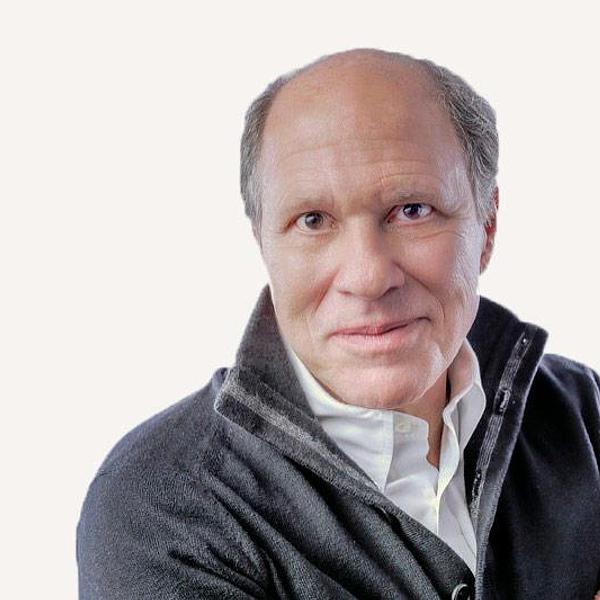
DuckDuckGo was founded in 2008 by Gabriel Weinberg (CEO & Founder).
DuckDuckGo has raised $13.0M in total across 2 funding rounds.
DuckDuckGo has raised $13.0M across 2 funding rounds. Most recently, it raised $10.0M Series D in August 2021.
| Date | Company | Round | Lead Investor(s) | Co-Investor(s) |
|---|---|---|---|---|
| Mar 19, 2026 | Cloaked | $375.0M Series B | Mark Crane, Liberty City Ventures | Assurant Ventures, Fifth Growth Fund, Human Capital, LG Technology Ventures, LUX Capital, Marquee Ventures, NFL Players Association |
| Sep 4, 2024 | You.com | $50.0M Series B | Margaret WU | DAY ONE Ventures, NVIDIA, Salesforce Ventures, Softbank Ventures Asia, Ludwig Schulze |
| Date | Round | Lead Investors | Other Investors | Status |
|---|---|---|---|---|
| Aug 1, 2021 | $10M Series D | — | Andreessen Horowitz, Chloe Sladden, Coelius Capital, DST Global, Offline Ventures, Operator Ventures, Ravelin Capital, Sequoia Capital, Sweet Capital, Tiger Global Management, Todd And Rahul's Angel Fund, Audrey Gelman, Scott Belsky, Theresa Johnson, TIM Kendall | Announced |
| Oct 1, 2011 | $3M Series U | — | 8VC, Accelerator Ventures, Baseline Ventures, Bling Capital, BoxGroup, Brainchild, Capital Factory, Hack VC, Heretic Ventures, Inovia Capital, Kapor Capital, Khosla Ventures, Lightbank, Long Journey Ventures, Maveron, Omidyar Ventures, Rivet Ventures, SciFi VC, SV Angel, Techstars, The HIT Forge, Thrive Capital, Union Square Ventures, Y Combinator, Evan Williams, James Hong, Jeffrey LAM, Jeremy Stoppelman, Justin Kitch, Philip Kaplan, Scott Belsky, Steve Chen, TIM Cederman Haysom, TOM Mcinerney, Trevor Blackwell, William Boebel | Announced |
Key people at DuckDuckGo.
DuckDuckGo is an American software company that builds privacy-focused products, with its flagship offering being a search engine that does not track users' searches or browsing history.[1][2][4] It serves privacy-conscious individuals and businesses seeking alternatives to data-tracking giants like Google, solving the problem of online surveillance by providing unprofiled search results, tracker-blocking browsers, extensions, and services like Privacy Pro (a VPN bundle).[1][2][4][5] The company has demonstrated strong growth momentum, processing over 3 billion monthly searches, achieving #2 mobile search market share in the US and 20 other markets, and expanding to 290 team members across 15 countries with 6 million monthly downloads.[4][6]
DuckDuckGo was founded in 2008 by Gabriel Weinberg in Valley Forge (later Paoli), Pennsylvania, as a side project to improve upon Google's search results by prioritizing user privacy.[1][2][3] Weinberg, an entrepreneur frustrated with personalized tracking, launched the search engine without storing user data, implementing a no-tracking policy by 2010.[2][3] Early traction built steadily: by 2011, it generated $115,000 in revenue with three employees; searches reached 1.5 million daily by 2012, 10 million by 2015, and 60 million by 2020, fueled by integrations like Mozilla Firefox in 2014 and Tor Browser default in 2016.[1][3] Union Square Ventures led its first investment in 2011, supporting expansion into browsers (e.g., Windows in 2023) and apps.[2]
DuckDuckGo rides the surging demand for data privacy amid scandals (e.g., Cambridge Analytica), regulatory pressures like GDPR/CCPA, and consumer backlash against Big Tech tracking, positioning it as a credible Google alternative with 1.5-2% global market share but #2 in key mobile markets.[3][4][5] Timing aligns with post-2020 privacy awareness spikes, Tor/Firefox integrations, and mobile shifts (though US desktop use persists).[1][3] Favorable forces include ad-blocker normalization, VPN growth, and contextual ad viability, enabling influence via standards-raising (e.g., blocking invasive networks) and business tools for privacy-valuing audiences, fostering competition in search without data exploitation.[2][4][6]
DuckDuckGo's trajectory points to further ecosystem expansion, with ongoing search enhancements, browser iterations across platforms, and Privacy Pro scaling to capture subscription growth amid rising VPN demand.[2][4][6] Trends like AI-driven privacy threats, stricter global regs, and "de-Googling" will propel it, potentially challenging incumbents if daily searches (already 100M+) hit billions via viral adoption in privacy hotspots.[3][4] Its influence may evolve from niche defender to mainstream staple, humanizing privacy tech while proving profitable non-tracking models—reinforcing its origin as Weinberg's quest for better, unbiased search.
DuckDuckGo was founded in 2008 by Gabriel Weinberg (CEO & Founder).
DuckDuckGo has raised $13.0M in total across 2 funding rounds.
DuckDuckGo's investors include Andreessen Horowitz, Chloe Sladden, Coelius Capital, DST Global, Offline Ventures, Operator Ventures, Ravelin Capital, Sequoia Capital, Sweet Capital, Tiger Global Management, Todd and Rahul's Angel Fund, Audrey Gelman.